
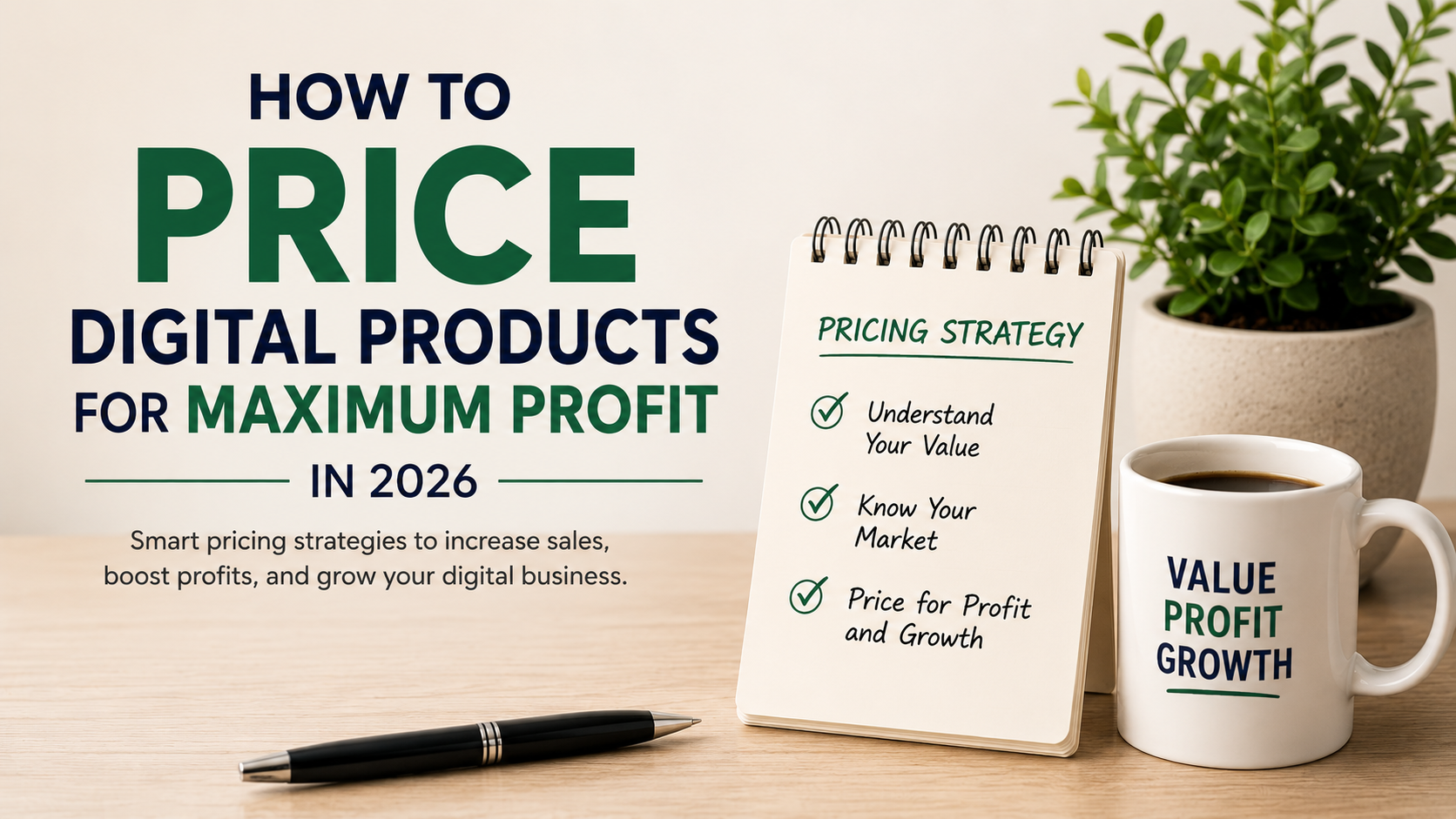
Introduction
Pricing is one of the most important decisions when selling digital products. Set your price too low, and you may undervalue your work. Set it too high, and potential customers may hesitate to buy.
The good news is that digital products have no inventory or shipping costs, which gives creators significant flexibility. The most effective pricing strategy focuses on the value your product provides rather than the time it took to create it.
In this guide, you will learn how to price digital products for maximum profit in 2026 and how to find a balance between competitiveness and perceived value.
Why Pricing Matters
Your price affects:
- Conversion rates
- Profit margins
- Brand perception
- Customer expectations
- Long-term growth
Value-Based Pricing
The most effective approach is to price based on the value delivered to the customer. If your template saves someone hours of work or helps them make better decisions, the product may justify a premium price.
Typical Price Ranges
- Simple templates: $9–$19
- Advanced templates: $19–$49
- Business toolkits: $49–$149+
- Bundles: $29–$99+
Factors That Influence Pricing
- Complexity of the product
- Time saved for the customer
- Design quality
- Documentation and support
- Competition
- Target audience
Pricing Strategies That Work
- Anchor pricing
- Limited-time discounts
- Product bundles
- Tiered pricing
- Psychological pricing (e.g. $19 instead of $20)
Example Pricing Scenario
A professional Excel dashboard priced at $29 that sells 50 times per month can generate $1,450 in monthly revenue from a single product.
When to Raise Prices
Consider increasing prices when your product receives strong feedback, consistently converts well, and offers significant value compared with alternatives.
Common Pricing Mistakes
- Competing only on price
- Undervaluing your work
- Ignoring perceived value
- Changing prices too often
- Failing to test different price points
How Bundles Increase Revenue
Combining related products into bundles can increase average order value and provide a stronger value proposition for customers.
Final Thoughts
The best price is one that reflects the value your product delivers and supports sustainable business growth. Start with a fair price, monitor customer response, and adjust as your reputation and product portfolio expand.
Remember that customers are willing to pay for solutions that save time, reduce stress, and help them achieve better results.
Ready to sell your products at profitable prices? Explore ZellMarket and start building a high-value digital product business.
Comments (0)